 BC LS Retail Tips
Testing replication changes in a sandbox before they hit 40 stores
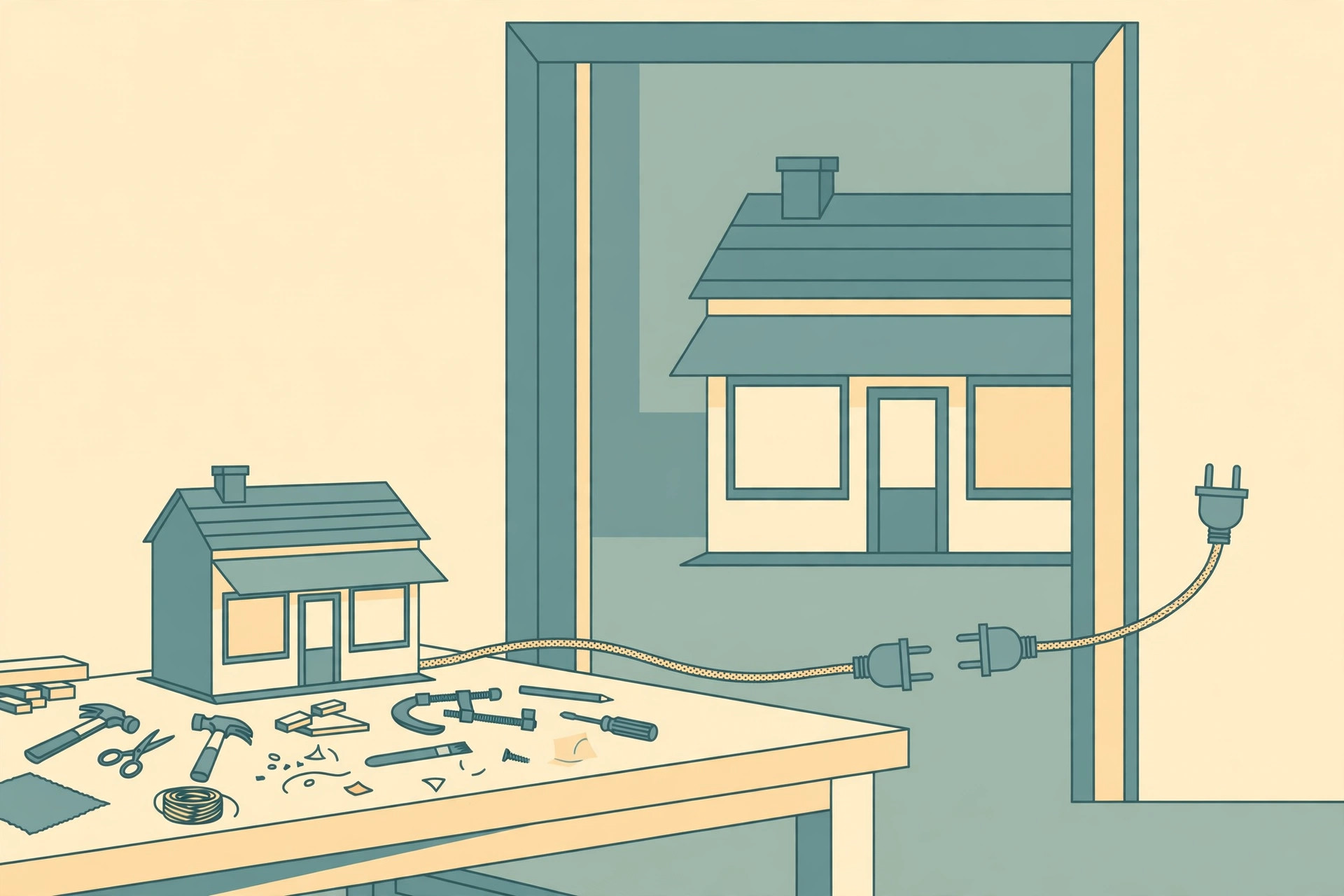
A sandbox test proves a replication change only if the sandbox was made safe first and the result is read from evidence at the destination. Copied live, a sandbox can post, send, and sync on its own; blocked by default, its web replication can fail for reasons that have nothing to do with the change under test. Neutralise the copy, unblock the plumbing the change needs, run one known data change, and pass or fail the change on what arrives.
Why the caution: LS Retail’s own replication tips state that replication setup is often underestimated and not thoroughly tested before or during UAT, and that demo jobs and subjobs are just a starting point, to be adjusted to specific needs. A change that “worked in the sandbox” against demo-shaped setup, in a copy that was quietly misbehaving, proves very little about a 40-store estate.
Build the test sandbox: copy, then neutralise it
LS Retail’s migration guidance gives the starting point for SaaS testing: create a sandbox environment by copying the production environment. A copy is a snapshot with sharp edges. It does not stay in sync with production, so every result it produces describes the data as it was at copy time, not as it is today.
The same copy arrives feeling live. Job Queue Entries copied from production can still fire. The documented advice for a copied sandbox is direct: right after copying, set all Job Queue Entries to On Hold, so the copy does not post, send, or sync anything by itself. Until that step is done, the sandbox is not a test environment. It is a second production-shaped system with nobody watching it.
One more migration warning belongs in the test plan. During cloud migration the on-premises solution remains the primary system; migration can run more than once and only migrates changed tables, but LS Central SaaS data is overwritten by the run. A sandbox that doubles as a migration target can have its contents replaced mid-test. Keep the replication test on a copy whose lifecycle is controlled by the test, not by a migration schedule.
- Copy production to a sandbox environment. Record the copy date; every later result is relative to it.
- Set all Job Queue Entries to On Hold immediately. Nothing in the copy should post, send, or sync by itself.
- List what the change under test actually needs running. Release only those queues, deliberately, when the test run starts.
- Write down the drift. Note that the copy does not stay in sync with production, and date-stamp any conclusion drawn from it.
Unblock the plumbing: HttpClient, storage, connections
In a copied sandbox, outgoing HTTP calls from extensions are blocked by default. That default has a named replication symptom. In a sandbox, the WEBREPLICATION job, codeunit 99009521, LSC Web Repl. Functions, can fail with “Could not list container” because the System Application extension’s Allow HttpClient Requests is disabled in non-production environments.
The documented fix is short: open Extension Management, open the System Application extension’s Extension Settings, and enable Allow HttpClient Requests. The setting is per extension, so the check belongs in the sandbox setup list for any test whose replication path makes HTTP calls, not in the failure investigation after a wasted run.
Do not stop at the first error code. Spec check on the two container failures:
| Symptom in the sandbox | Documented cause | Documented response |
|---|---|---|
| WEBREPLICATION fails with “Could not list container” | Allow HttpClient Requests disabled for the System Application extension in a non-production environment | Extension Management → System Application → Extension Settings → enable Allow HttpClient Requests |
| A 403 error on listing the container | A wrong storage account access key in Web Replication Azure Storage Setup, or storage restrictions | Correct the access key in Web Replication Azure Storage Setup; check storage restrictions |
Two different causes, two different fixes, one similar-looking failure. Enabling HttpClient will not repair a wrong storage key, and replacing a key will not unblock an extension that is not allowed to call out. Read the error before choosing the fix.
Run the change against a known data change
LS Retail’s tips set the scope rule for the test itself: always test replication jobs to ensure the essential tables for store and POS operations are included, and avoid replicating tables the POS does not need. A replication change, a new subjob, a changed filter, a new table, gets tested against that rule, not just against its own happy path.
- Make one known change in the sandbox source. Pick a record the tester can identify unambiguously at the destination: a specific item, price, or store record tied to the change under test.
- Run the changed job only. Keep unrelated queues On Hold so the result cannot be credited to the wrong job.
- Include a negative check. Confirm a table the POS does not need did not gain a replication path as a side effect of the change.
- Repeat the run. A second run should move nothing new for the same change. Movement on every run, for unchanged data, is a finding, not a pass.
Read the evidence: destination records and a clean run
Pass the change on artefacts, not impressions. Three checks, in order:
- The destination holds the change. The known record from the test is present at the destination, with the changed values, and nothing unrelated arrived with it.
- The job completed clean. The run finished without the container errors described earlier, and without a queue having to be released by hand mid-run.
- The scope held. Essential tables for store and POS operations are covered by the changed setup; tables the POS does not need are not replicated.
What success looks like: all three checks pass on the same run, and the evidence, which record, which destination, which run, is written into the test note. A green job with no destination check is a transport result. The estate cares about data arriving, in scope, at the stores that need it.
Promote or roll back: the go-live decision checklist
- Promote when the destination check, the clean run, and the scope check all passed against the copied production data, and the test note records the copy date the results depend on.
- Roll back when the change moved data outside its intended tables, needed manual queue intervention to complete, or passed only because the sandbox differed from production in a way the test did not control.
- Re-test when the failure traced to sandbox plumbing. HttpClient blocked, a wrong storage key, rather than to the change itself. Fix the plumbing, then run the same known change again; a pass earned after a plumbing fix describes the change, a pass assumed without re-running describes nothing.
One discipline survives every outcome: the sandbox stays neutralised after the test. Job Queue Entries go back On Hold, and the next change starts from the same safe copy discipline as this one.
, Dex Carter, Tech Writer
Keep readingNext: Designing Data Director Jobs and Subjobs That Don't Fight Each Other →