 BC LS Retail Tips
Till Accountability: One Cashier, One Float, One Story at End of Day
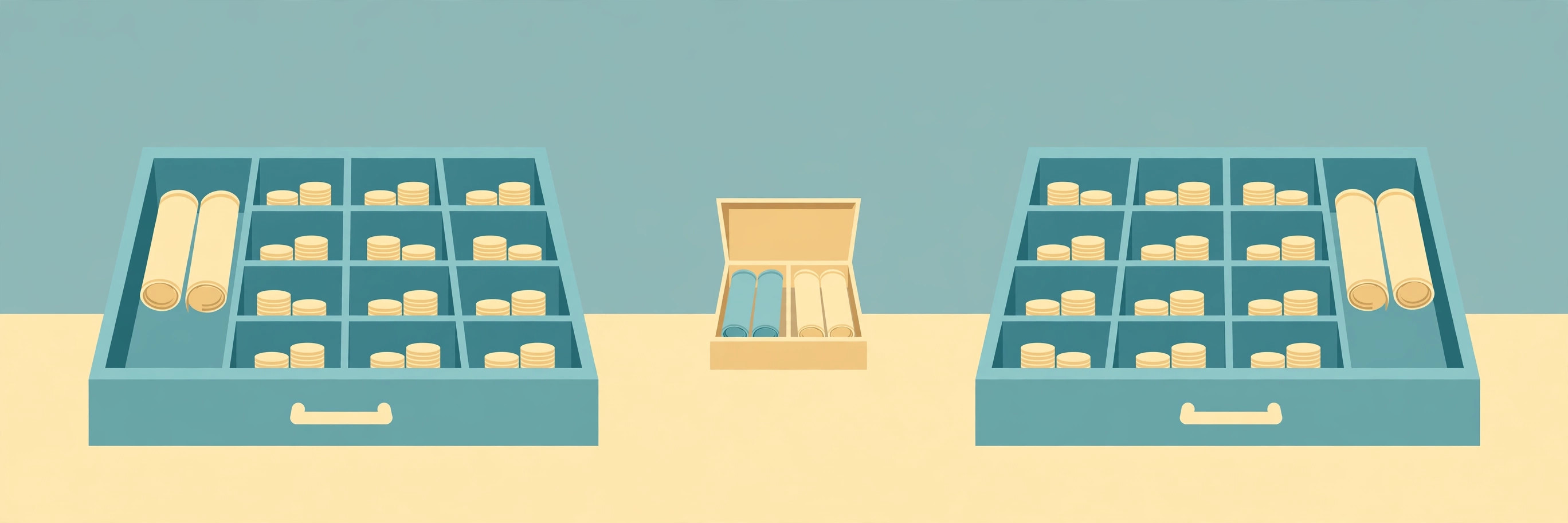
A shared till is often described as if it still had an owner: “That is mostly Ana’s register.” It does not. If any cashier can ring on a till, the end-of-day number belongs to the register, not to a person, and a variance on that register cannot be attributed to anyone. Accountability is not a label applied at close. It is a property of how the till was assigned at open. This guide sets the two models side by side, then gives the procedure and the decision checklist for running one cashier, one float, and one story per person.
Head-to-head: register accountability vs till accountability
The two models differ in one place: what the till is assigned to.
| Point | Register accountability | Till accountability |
|---|---|---|
| Assignment | The till is assigned to a register, and any cashier can use it | The till is assigned to a specific cashier, who must count it and attach it to a drawer |
| Who answers for a variance | The register as a whole, no single person | The named cashier the till belongs to |
| Sharing one register | Sharing is the default, and tills stay mixed | Dual cash drawers let two cashiers share one register while keeping their tills separate |
| Shift pattern it fits | Several users logging on to the same shift | A single-user shift, where one user can be held solely responsible for discrepancies |
The shift view points the same way. Single-user shifts let a retailer hold one user solely responsible for discrepancies in that shift. Multiple-user shifts are possible, but they need the Allow multiple shift logon permission, the extra permission exists precisely because sharing is the exception that has to be granted, not the default that accountability survives.
Set the float so one person owns it from the first sale
The float is the opening cash the rest of the day is judged against, so the opening routine matters as much as the close. The sourced cash-handling practice is simple: the float is verified by two employees at opening, and one cashier is assigned per drawer, which is what ensures accountability for that register. Two people verify the starting number; one person then owns everything that happens to it.
- Assign the till to a named cashier for the shift, not to the register alone.
- Count the float at opening and have a second employee verify that count before the first sale.
- Have the cashier attach the till to the drawer they will actually use, so the physical cash and the assignment match.
- Keep that cashier on a single-user shift where the setup allows it, so discrepancies in the shift have one owner.
- If a second cashier must work the same register, move to a dual-drawer arrangement (below) instead of letting both ring on one till.
What success looks like: at any point in the day, one name answers the question “whose cash is in that drawer?”, without checking a rota or asking who else logged on.
Blind declaration: count before you see the expected figure
A count taken while looking at the expected total is not a count; it is a confirmation. A blind close removes that shortcut: the cashier counts without knowing the expected total. Blind-closed shifts also have a practical side effect, they free a register without a full count where the workflow allows that, but the control value is the blind part, not the speed.
At close, the sequence runs in this order:
- The cashier counts the till and records the counted amount first, with no expected figure on screen or on paper in front of them.
- The tender declaration then compares the counted cash against the expected shift amount.
- Any difference is a variance tied to that cashier and that shift, investigate it as one person’s story, not as a register mystery.
What success looks like: the counted figure exists before the expected figure is revealed, and the comparison is the system’s job, not the cashier’s memory.
Breaks, swaps, and the dual-drawer answer
Most shared-till habits start at a break: a second cashier “just covers” the register for twenty minutes on the first cashier’s till. That is exactly the moment attribution dies. Till accountability has a cleaner answer, dual cash drawers. With two drawers, two cashiers can share one register while keeping their tills separate, so a break means swapping drawers, not swapping identities on one till.
Where a second drawer is not available, the honest options are narrower: close and count the first cashier’s till before the second cashier starts their own, or accept, explicitly, as a policy choice, that the shared period runs under register accountability and its variances cannot be attributed to a person.
Reading the variance: one story per cashier
The payoff arrives at end of day. A balancing routine that produces a variance tied to a named person rather than a terminal turns the close into a short, specific conversation: this cashier, this shift, this difference. A register-level variance produces a longer, useless one: everyone who touched the till, no one who owns the number.
Read the results in that order. Start with the per-cashier variances, look for a pattern belonging to one person across shifts, and treat a one-off small difference differently from a repeated one. The model cannot tell you why a variance happened, miscount, wrong change, or something worse, but it can tell you whose count to review first, which is the question a shared till can never answer.
Decision checklist: which model fits your store
- Choose till accountability when one cashier can own a drawer for a whole shift, when dual drawers cover peak overlap, and when variance follow-up matters more than logon convenience.
- Register accountability can be acceptable when staffing genuinely rotates several cashiers through one register all day, provided the store accepts that variances stay at register level and cannot be attributed.
- Never mix silently: a till that is shared in practice but reported as if it had one owner produces the worst of both models, a named person blamed for a number they did not solely create.
- Whatever the model, keep the blind count. Counting without knowing the expected total protects an honest cashier as much as it catches a careless one.
, Dex Carter, Tech Writer
IndexBack to all guides →