 BC LS Retail Tips
Replenishment by Store Grade: Clustering Stores So One Rule Fits None Perfectly but All Adequately
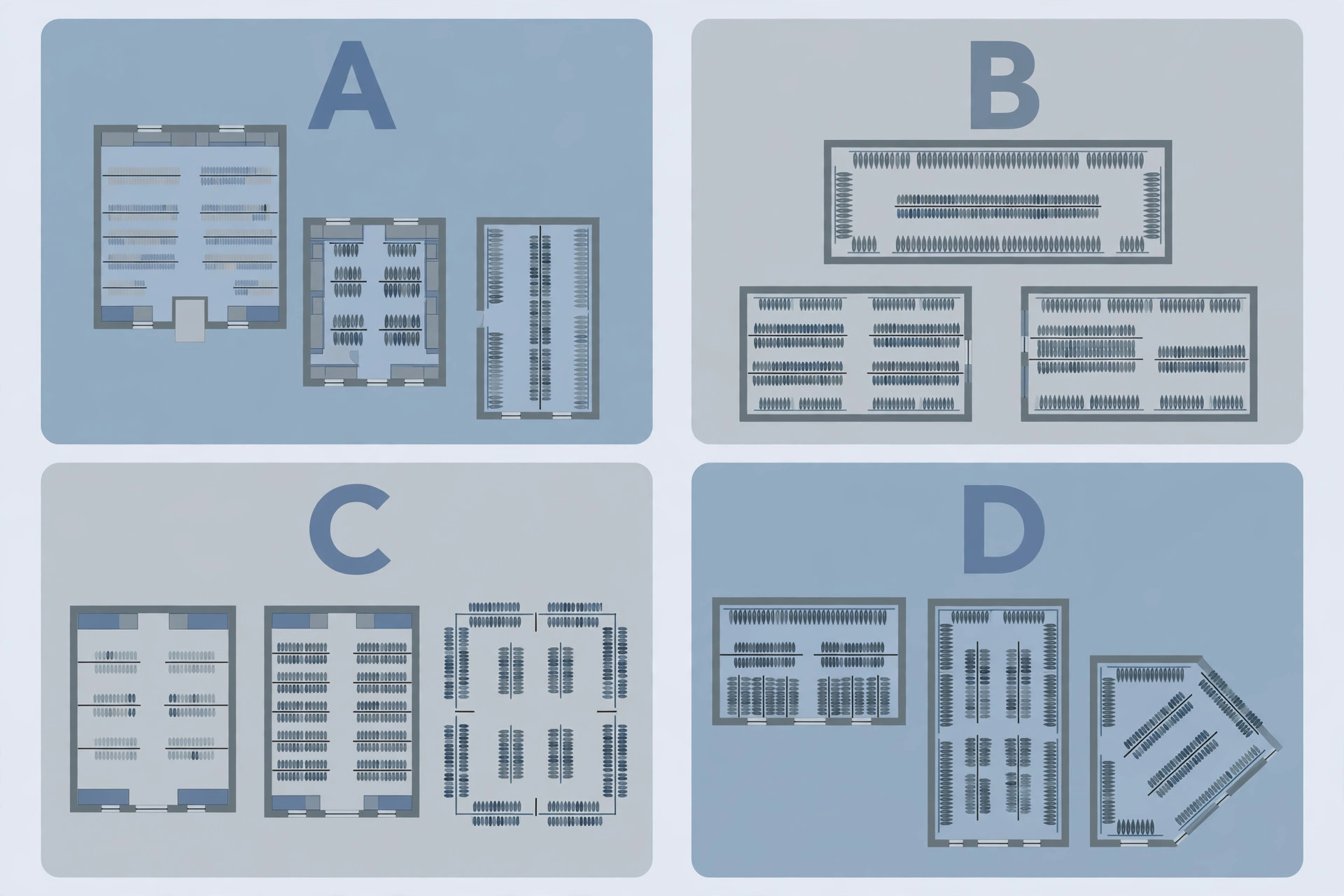
How few store grades can a retail chain run before the grades stop describing the stores? That is the real question behind store clustering. One replenishment rule for every store is simple to maintain and wrong almost everywhere: the flagship and the small high-street unit do not sell at the same rate, do not hold the same stock, and do not serve the same catchment. A grade per store is accurate and unmaintainable. Grades are the deliberate middle position, a small set of store clusters, each sharing one replenishment behaviour, on the understanding that the shared rule fits no single store perfectly and every store adequately. This runbook builds the clusters from sales evidence, wires them into LS Central's grade comparison, and keeps an exceptions path open so the odd store or category never forces a redesign.
The question: how few grades can you get away with?
Start from the mechanism the grades have to feed. In LS Central, each location carries a Default Replenishment Grade Code and each item carries a Replenishment Grade. An item is automatically replenished to a store when the item's grade code is smaller than or equal to the store's grade. The documented example shows how sharply that one comparison cuts: an item with grade A replenishes only to grade A stores, while grade D items replenish to all stores graded A, B, C and D. Every clustering decision in this article exists to make that comparison produce sensible quantities, nothing more abstract than that.
The grade count is a trade-off, not a target. Too few grades and the comparison pushes the same range and depth into stores with very different demand. Too many and the setup becomes per-store rules wearing a grade costume, with maintenance to match. The working test: a grade earns its place when the stores in it genuinely share a rate of sale and a stock-holding pattern, and it loses its place when planners keep overriding it store by store.
Build clusters from evidence: rate of sale, space, and mix, not geography alone
Planning practice groups stores by what they sell and how, not by where they sit on a map. The evidenced inputs are rate of sale, size curve, price-band mix and catchment, so that range and depth follow demand rather than postcode. Two stores in the same town can belong in different grades; two stores hours apart can be twins.
Local taste is the clearest case for clustering over geography. Clustering tailors assortments to local tastes: cold-fashion clusters receive winter coats earlier and deeper, while warm clusters receive them later or not at all. A purely geographic grouping would average those two behaviours into a delivery that suits neither. Planners also see better forecasting and demand prediction at cluster level than at chain level, and that forecast quality is what informs buys and allocations downstream.
One measurement warning from assortment planning: traditional grading ranks stores against average sales, from A down to E, but sales volume alone is a trap. Using sales volume plus physical selling capacity is recommended because equal sales can hide very different space, two stores turning over the same money may have half the shelf room of each other, and depth set from sales alone will overflow the smaller one.
Separate the levers: grade for width, grade for depth
The most useful distinction in the planning sources is that "grade" names two different levers, and confusing them produces most bad grade designs. Assortment grade determines width, how many options a store receives, and all stores in a grade carry the same width. Replenishment grade determines depth, the planned units per option. Width decides what the store ranges at all; depth decides how much of each ranged item it holds.
| Lever | What it controls | What stays the same inside a grade | How it is corrected |
|---|---|---|---|
| Assortment grade | Width, the number of options a store receives | All stores in the grade carry the same width | Re-grade the store or carve out a category exception |
| Replenishment grade | Depth, planned units per option | The planned depth basis for the grade | Actual units delivered depend on performance, refining the initial quantities over time |
Depth carries a built-in humility that width does not: planned units are a starting point, because actual units delivered depend on performance and refine the initial quantities over time. So a grade design can be firm about width, the range decision, while treating depth as a first estimate the sales data will correct. Designs that freeze both levers at setup are the ones that look wrong by mid-season.
Wire it into LS Central: item grades, store grades, and the comparison rule
- Set the store side first. Assign each location its Default Replenishment Grade Code from the cluster work above, the grade of the cluster the store was evidenced into, not the grade its manager asked for.
- Grade the items. Give each item a Replenishment Grade that reflects how widely it should distribute: broadly ranged staples take a low-selectivity grade, narrow lines take a restrictive one.
- Check the comparison on known cases before relying on it. Work the documented example by hand: a grade A item should replenish only to grade A stores, and a grade D item should replenish to stores graded A, B, C and D. If a test replenishment run disagrees with either case, the grade codes, not the rule, are wrong.
- Run replenishment and read the output by grade. Review which items reached which stores against the cluster intent: width mistakes show up as items landing in stores that should never range them; depth mistakes show up as quantities that ignore the store's selling capacity.
What success looks like: every store's replenishment can be explained by one comparison, item grade against store grade, the A/D test cases behave exactly as documented, and no planner is maintaining a private list of stores the grades secretly do not apply to.
Run the exceptions: category overrides and the chaotic escape hatch
LS Central's own guidance starts from an honest question: do all stores and all items really follow the graded approach without exception? For most chains the answer is "mostly", and the system provides for both answers. Where exceptions are few, they can be handled with Setting Grades for Locations using Item Categories: a location's grade is overridden for one category, so a store that is mid-grade overall can still take a top-grade range in the one category its catchment over-buys.
Where exceptions are many, the documented alternative is the chaotic assortment approach. That is not a failure state; it is the honest setup for a retailer whose demand genuinely does not cluster. The decision rule is about exception volume: a handful of category overrides is maintenance, but an override list that grows every month is the grades telling you they describe a chain you do not run. At that point, re-cluster from fresh evidence or move to the chaotic approach deliberately, do not let the override list quietly become the real system.
Review cadence: re-grade on a schedule, not on complaints
Clusters decay. The planning cycle includes re-clustering as store performance shifts, which means re-grading belongs on a calendar, not in an inbox. A store that was mid-grade at setup may have outgrown its cluster; a category override added for one season may now be permanent behaviour that belongs in the grade itself.
- Store's rate of sale or mix has shifted materially since grading? Move it at the next scheduled re-grade, mid-season grade changes rewrite width and depth for stock already in flight.
- One category keeps overriding? Promote the override into the grade design or accept it as a standing category grade; do not renew it by habit.
- Overrides multiplying across categories and stores? Treat it as evidence the clusters no longer match demand: re-cluster from rate of sale, size curve, price-band mix and catchment, or take the chaotic escape hatch consciously.
- Depth repeatedly corrected by performance in one grade? The planned units for that grade were a poor starting point, reset them; the refinement loop only works if someone reads what it keeps correcting.
, Dex Carter, Tech Writer
IndexBack to all guides →