 BC LS Retail Tips
Loyalty Tender as Payment: Paying Fully or Partly with Points
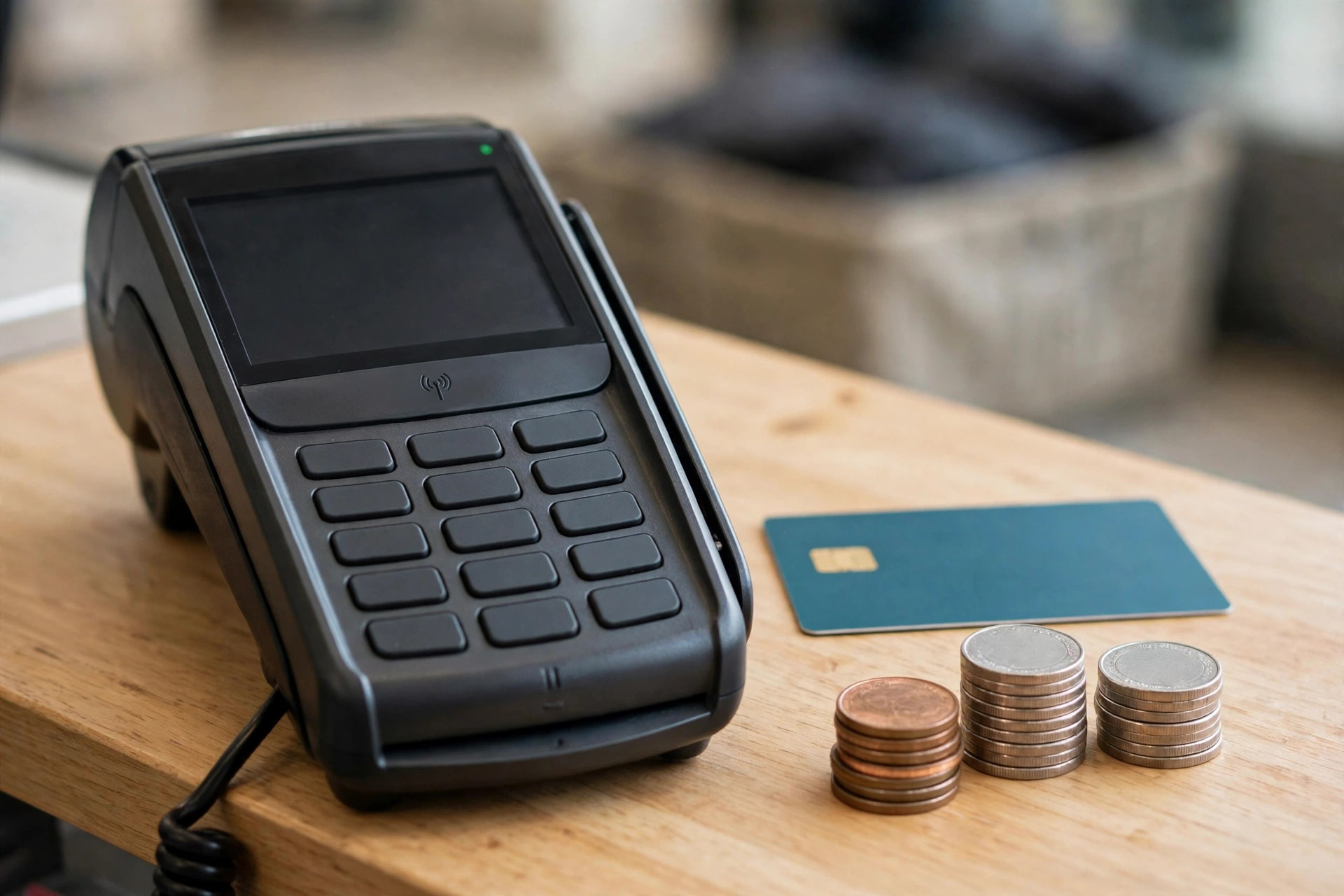
Can a member pay for the whole basket with points, and what happens at the till when the points cover only part of it? Those two questions decide whether points-as-payment is a tender or a discount in disguise. A discount reduces the price. A tender settles a balance, sits alongside cash and card in the payment mix, and has to reconcile in the day's totals. LS Central's own member-points documentation supports the tender reading for one specific points type, and the distinction matters before any rate is set.
Points are a tender here, not a discount, why that matters
The LS Central help for setting up member points draws a line between points types. Other Points are either bought or transferred. They are not used in upgrade or downgrade calculations, earning them does not move a member between schemes, but they can be used as award points for offers and tenders. Tenders is the operative word: the documented use is payment, not price reduction.
A rate gives that payment a value. The LS Omni service reference's GetPointRate-style example puts it at 1 point = 0.01, one cent per point, so 1,000 points settle 10.00 of a balance. Treat that figure as the documented example of how a rate is expressed, not as a recommendation. The rate a retailer chooses is a pricing decision with a balance-sheet shadow: every outstanding point is a promise to accept that value later.
Note: LS Central's published help states the Other Points tender use in a single line and documents no full till procedure for it. The procedures below separate what LS sources state from till patterns documented on other POS systems, which are labelled as contrast wherever they appear. Verify each step against the retailer's own POS build before training staff on it.
Configure: point rate, minimums, and what points may not buy
Three settings decide whether points tender is safe to switch on. The rate is the LS-documented one. The other two come from another system's published loyalty settings. PHP POS, a different product, and are included because they state, cleanly, decisions every points-tender setup has to make somewhere.
| Decision | What to settle | Basis |
|---|---|---|
| Point rate | The money value of one point when tendered, the documented example expresses it as 1 point = 0.01 | LS Omni service reference example, via LS Central point setup help |
| Minimum redemption | A minimum number of points before points can be tendered at all | PHP POS loyalty settings, different POS, policy contrast |
| Gift-card exclusion | Whether points may pay for gift cards, in the contrast system, points cannot pay for gift cards by default | PHP POS loyalty settings, policy contrast |
| Prompt at checkout | Whether the till prompts to use points when a balance exists | PHP POS documents a prompt-to-use-points option, policy contrast |
The gift-card row deserves its reason stated out loud. Points that can buy a gift card can be converted into a second, transferable store of value, and the original points balance becomes hard to trace. Whether a given LS Central build expresses the exclusion the same way is a setup question for that build; the policy question, should points buy gift cards at all, should be answered before the tender goes live, not after the first conversion.
Full payment with points at the till, step by step
The checkout shape of points tender is documented on the contrast system in one sentence: at checkout, points act as another tender, choose Points as the payment type. Applied to a full payment, the runbook runs like this:
- Identify the member on the transaction before tendering, so the points balance being spent is the right member's balance.
- Confirm the balance covers the full amount due at the configured rate, amount due divided by the rate gives the points required.
- Choose Points as the payment type and apply the points to the full amount.
- Complete the transaction and check the receipt: the tender shown is points, the amount matches the balance due, and no cash or card tender remains open.
What success looks like: the transaction closes on the points tender alone, the member's balance drops by exactly the points the amount required, and the receipt reads as a payment, not as a discount line reducing the price.
Part payment: points first, then the remainder
Part payment is the common case, and the clearest documented procedure for it comes from yet another POS. Redcat, hospitality software, cited here strictly as a procedural pattern. Its split-bill flow assigns items to a split bill, pays that bill with Loyalty Points media, then finalises the remainder with cash or card. The shape transfers even where the screens do not: points settle a defined portion first, a conventional tender settles what is left.
- Decide the split before tendering: how much of the balance points will cover, in money terms, at the configured rate.
- Apply the points tender to that portion, on a split-bill system, by assigning the relevant items to the split bill and paying it with points.
- Tender the remainder with cash or card and complete the transaction.
- Check the receipt shows both tenders, each for its own amount, adding up to the full balance.
What success looks like: two tender lines, one points and one money, summing to the amount due, never a single blended figure nobody can unpick at reconciliation.
Order matters for a practical reason. Points first fixes the points amount while the full balance is still visible. Tendering money first invites the awkward remainder, a points balance that almost, but not quite, covers what is left.
Insufficient balance and the mid-transaction script
The failure case has a documented shape on the contrast system: if the member lacks sufficient points, the POS errors, showing both the current points balance and the number of points required. Two numbers, stated at the moment of failure. That is the whole script a cashier needs, plus the choice that follows it.
- Read the two numbers back to the member: the balance they have, and the points this payment would require.
- Offer the part-payment route: tender the points they do have, within any minimum-redemption rule, and settle the remainder with cash or card.
- Or offer to skip points entirely and tender the full amount conventionally, leaving the balance untouched.
- Complete the chosen route and confirm the receipt matches it before the member leaves the till.
What success looks like: no improvisation, no manual price override dressed up as points, and a member who heard their balance and the required figure before deciding, because the system stated both.
Reconciliation: points tenders in the end-of-day picture
A tender that does not reconcile is a discount with extra steps. Close the loop with three checks, run until they become habit. First, points tendered for the day, converted at the configured rate, should match the points value in the day's tender mix, the rate example makes the arithmetic plain, at 1 point = 0.01 every 100 points tendered are 1.00 of settled balance. Second, the points balances spent should drop by the same points the tenders consumed; a tender that took money value without moving a balance is a configuration fault, not a rounding issue. Third, part payments should appear as paired tenders, so a points line with no partner money line on a part-paid sale stands out.
The decision underneath all of it stays the opening one. Treat points as a tender, rate set, minimums decided, exclusions answered, failure script written, and the till behaviour follows. Treat them as a discount that happens to be called points, and every one of those decisions surfaces later, at the till, in front of a member.
Every points tender draws down the balance priced in the loyalty points liability estimator, which estimates what the outstanding points will claim in goods at your margin.
, Dex Carter, Tech Writer
IndexBack to all guides →