 BC LS Retail Tips
Physical Cards, Virtual Cards, and Mobile IDs: Member Identification Options
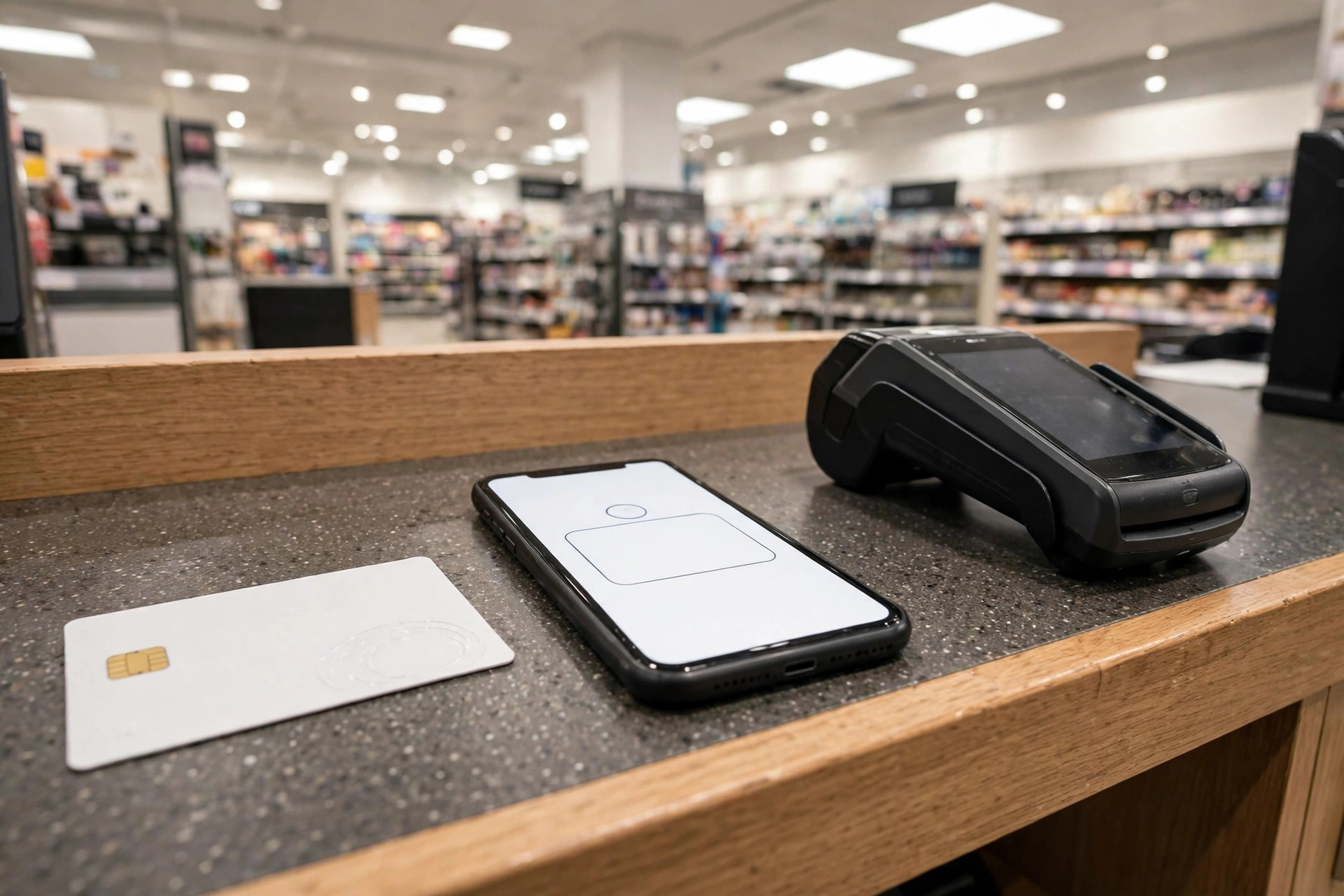
Issue two identifiers, not one. Give every member a primary way to be recognised at the till and a fallback that does not depend on the same object: a physical card plus a virtual or mobile identity, with lookup by member detail held in reserve for the day both are missing. Each option fails in a different way. The mix, not any single option, is what keeps a failure from turning into a queue at the till and a member who stops bothering.
Physical cards: cheap, fast, shareable
The physical card is the baseline, and its lifecycle is fully documented in LS Central's Member Management tasks: creating membership cards, assigning them to member accounts, and viewing the active cards in a club are all standard procedures. At the till, the card's job is narrow. The POS command CARD is an internal command that prompts for a card number, the number is the key, and presenting the card presents the number.
That narrowness is both the strength and the weakness. Strength: no battery, no login, no signal required; the interaction is a prompt and a number. Weakness: the card identifies itself, not the person holding it. A card lent to a relative, left in a partner's wallet, or photographed and shared still presents a valid number at the prompt. A retailer who issues only physical cards has chosen an identifier that is easy to use and equally easy to hand over, which may be an acceptable trade for a household-style club, as long as it is a choice and not a surprise.
The failure modes to plan for are mundane: the card is lost, left at home, or still active long after it should have been replaced. None of those is an argument against cards. They are arguments for the controls in the last procedure below, and for a second identifier that does not live in the same wallet.
Virtual and mobile IDs: personal, provable, phone-dependent
The digital side of the member record is present in LS Central's data model. The member data replicated for Omni and eCommerce includes Membership Card, Member Login, Member Login Card, and Member Device records, the card has digital counterparts: a login identity, a login card, and a registered device. A virtual or mobile ID therefore is not a separate programme bolted onto the club. It is the same membership, identified through the member's login and device instead of a piece of plastic.
The trade-off runs the other way from the physical card. A login- and device-based identity is tied to a person rather than to an object that can be handed across a kitchen table, so casual sharing takes more effort. In exchange, the identifier now depends on the phone: charged, carried, and working. A dead phone at the till is the mobile ID's equivalent of the card left at home, and it will happen on the busiest day, not the quietest.
Plan for the device change as well. Members replace phones. The Member Device record in the data model is the hint: device-based identification needs a routine for registering the new device and retiring the old one, or the fallback quietly stops working for exactly the members who rely on it.
Lookup by detail: the fallback that must not become the norm
Card missing, phone dead. The remaining route is to find the account from details the member can state, and attach the transaction to the account found. As a fallback, it saves the visit. As a habit, it is the weakest of the three options: it is the slowest at the till, it depends most on the cashier's care, and it asks the member to recite personal details within earshot of a queue.
Keep it, but fence it:
- Two details, minimum. One stated detail locates a candidate account; a second, different detail confirms it before anything is attached.
- Fallback only. If lookups become the everyday route for a member, fix the cause, replace the card or re-register the device, instead of normalising the weakest check.
- Watch the pattern. Repeated lookups on the same account are a signal: a lost card that was never blocked, or an identifier being borrowed. Both have procedures below.
Lost, shared, and blocked: the control procedures
The controls behind all three options are the documented card and account tasks: LS Central supports blocking and unblocking accounts, contacts, and cards, alongside creating and assigning cards and viewing a club's active cards. Run a lost-card report as a procedure, not an improvisation:
- Take the report and identify the member account and the specific card reported lost or shared.
- Block the card. Where the wider account or contact may be compromised, block at that level instead, blocking is available for accounts, contacts, and cards, so block at the narrowest level that covers the risk.
- View the active cards in the club for that member and confirm which cards remain live. The active list, not memory, is the record of what can still identify the account.
- Create a replacement card and assign it to the member account, or re-register the member's device if the mobile ID was the affected route.
- Unblock only what should return to use, and note what was blocked, when, and why, against the account.
What success looks like: the club's active-card view for the member shows exactly the identifiers the member should hold, the replacement is present, the lost card is not active, and at the till the new card answers the CARD prompt with its number while the old number no longer identifies the account.
Sharing deserves one separate sentence. A shared family card is a policy question before it is a systems question: decide whether the club permits household sharing, write the decision down, and only then reach for blocking. Blocking a card the business model implicitly encouraged just moves the argument to the till.
Choosing the mix: a decision framework by format
| Member pattern | Primary identifier | Fallback | Watch out for |
|---|---|---|---|
| Repeat in-person shoppers | Physical card | Mobile ID, then lookup by detail | Lost cards staying active; check the active-card list when a replacement is issued |
| App and online account holders | Virtual / mobile ID (login and device) | Physical card, then lookup by detail | Device changes; keep the device registration routine current |
| Households sharing one membership | Physical card, if sharing is permitted by policy | Lookup by detail with two confirming details | Decide the sharing policy first; the card cannot tell household members apart |
| Occasional and visiting members | Whichever identifier was issued at enrolment | Lookup by detail | Lookup becoming the norm; reissue the primary identifier instead |
Read the table as a starting configuration, not a verdict. The test is operational: pick the mix, then ask what happens on the day each identifier fails. If the honest answer for any row is “the queue waits while someone improvises,” the mix, or the blocking and reissue routine behind it, is not finished yet.
, Dex Carter, Tech Writer
IndexBack to all guides →